

.jpg)
.jpg)
Tube laser cutting is becoming an increasingly important process for manufacturers working with metal tubes, pipes, and structural profiles. Compared with traditional sawing, drilling, and notching processes, a modern tube laser cutting machine can integrate multiple operations into a single CNC-controlled workflow.
But choosing the right machine is not simply about selecting higher laser power or a larger processing range. Tube size, wall thickness, material, production volume, chuck configuration, material support, and automation all affect the final production result.
For first-time buyers, understanding these factors can help identify a tube laser solution that matches actual production requirements.
Why Is Tube Laser Cutting Becoming More Important?
Many tubular components traditionally require several separate operations:
Cutting → Drilling → Notching → Positioning → Welding
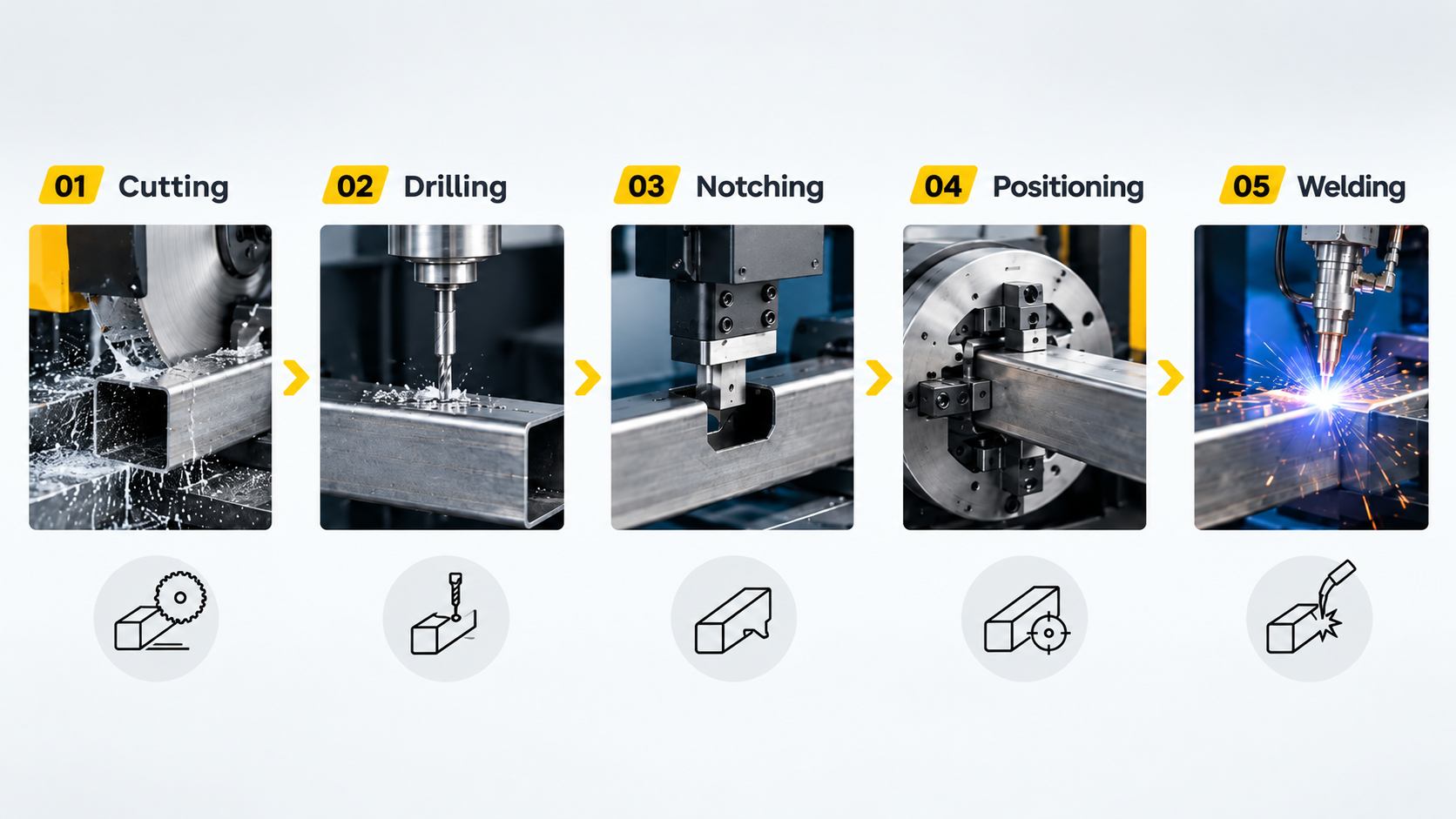
Each additional operation means more handling, more setup time, and greater potential for dimensional variation.
A CNC tube laser cutting machine can combine cutting, hole making, slotting, notching, and other features in one programmed process.
This is particularly valuable for structural components that require multiple features before welding or assembly.
The goal is not simply to cut tubes faster. It is to create a more integrated production process with fewer manual steps.
What Should You Consider When Choosing a Tube Laser Cutting Machine?
Several factors should be evaluated together.
Tube Size and Wall Thickness
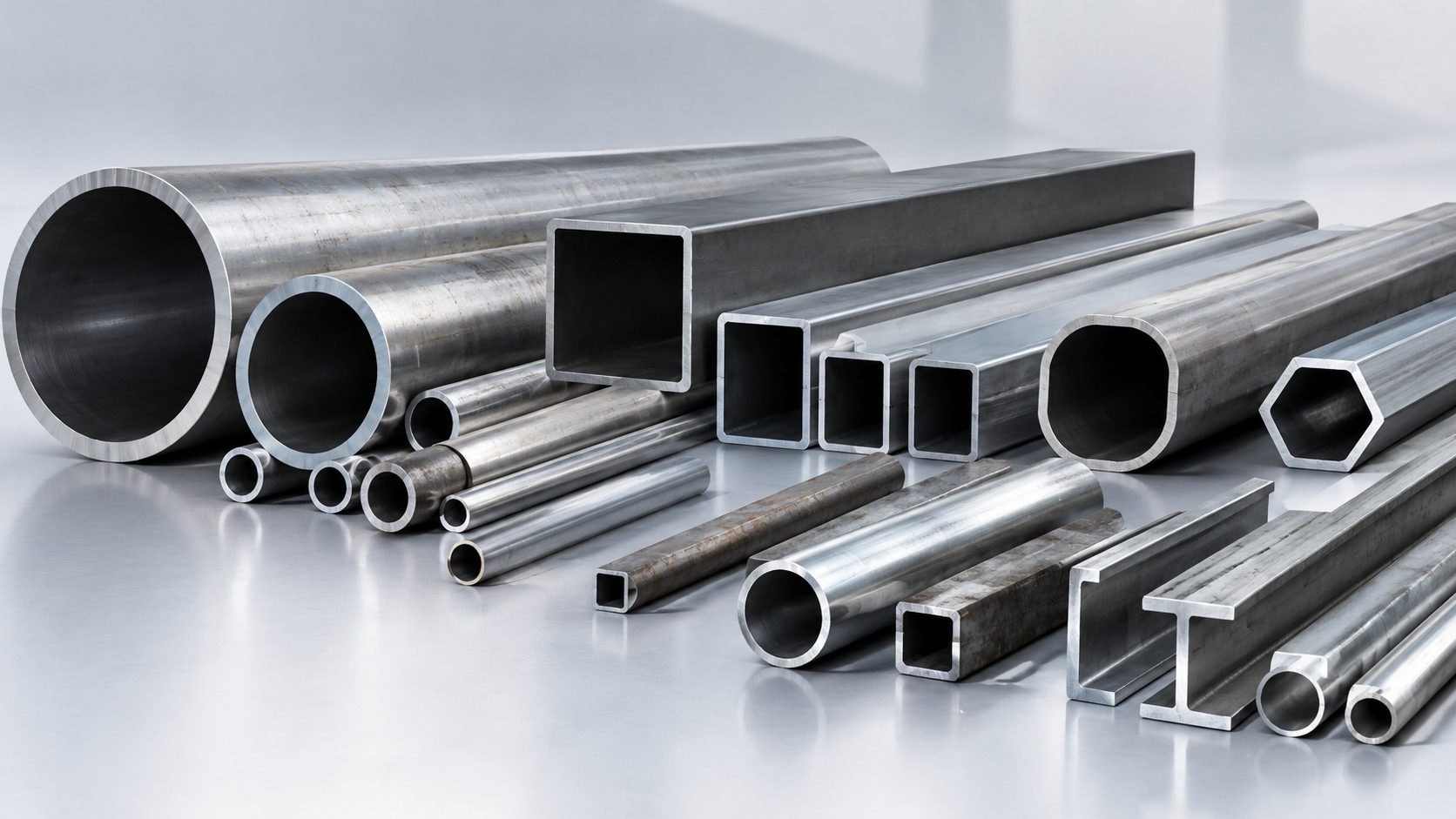
Start with the tubes you actually process.
Consider:
• Round, square, or rectangular tubes
• Angle steel and channel steel
• Minimum and maximum tube size
• Common and maximum wall thickness
• Tube length and weight
• Required cutting features
The maximum advertised processing range is only one part of the decision. A better approach is to test the machine using the tube sizes and materials that represent your daily production.
How Much Laser Power Do You Need?
Laser power should be selected according to material, wall thickness, cutting speed, and production requirements.
Higher power can provide advantages in thicker-material applications, but more power does not automatically mean higher overall productivity.
For example, a production line processing thin-wall tubes at high volume may benefit more from fast material handling and optimized motion control than simply increasing laser power.
Why Does Chuck Configuration Matter?
The chuck system determines how the tube is clamped and rotated during cutting.
For conventional applications, a standard chuck configuration may be sufficient. However, large, long, or complex tubes can require more advanced material control.
This is where machine architecture becomes important.
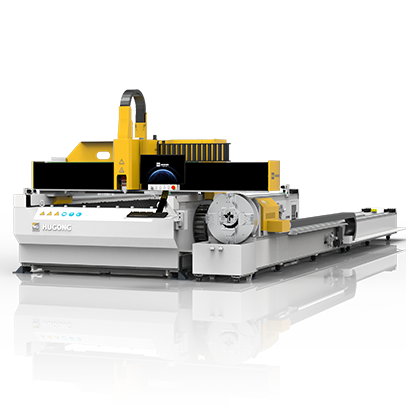
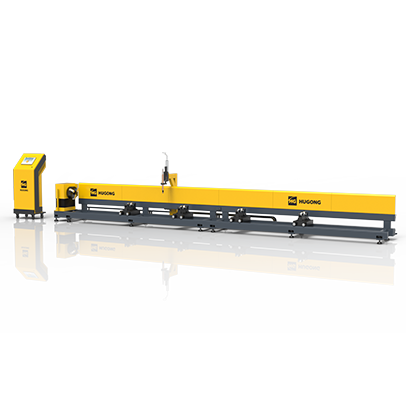
HUGONG's tube laser solutions include configurations designed around continuous feeding, stable support, and multi-axis movement rather than treating the chuck simply as a clamping component.
How HUGONG Approaches Tube Laser Cutting
HUGONG focuses on combining cutting performance with material handling and motion control to improve the overall production process.
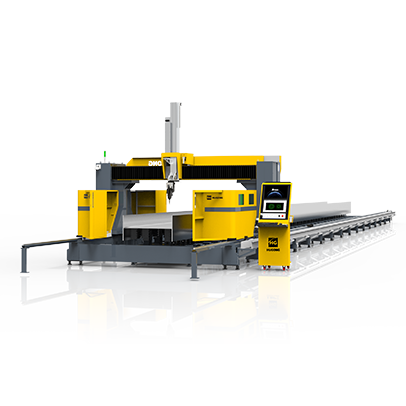
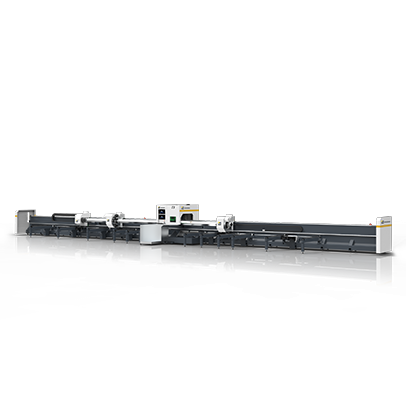
For example, the HGP3 adopts a three-chuck configuration for demanding tube and profile applications.
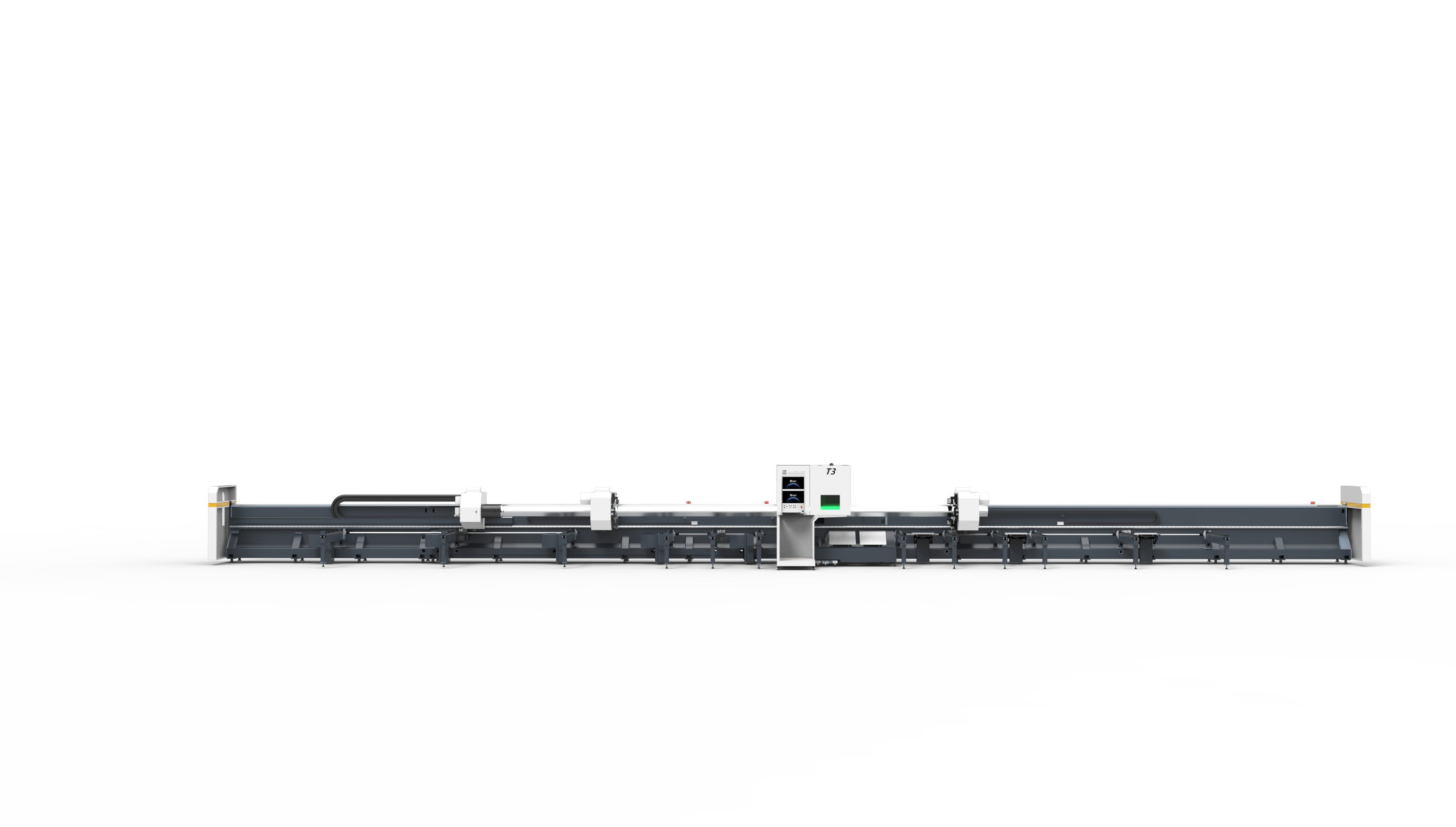
Its front-feeding and rear-support-following configuration helps maintain tube stability during processing. With 7-axis linkage, the system can coordinate tube movement and cutting operations for more complex profiles.
Another focus is material utilization. Under suitable processing conditions, the system can achieve up to 98% tube utilization, helping manufacturers reduce unnecessary material waste.
For manufacturers working with complex or high-volume tubular components, these capabilities can be more meaningful than a single headline specification.
Learn more about HUGONG HGP3 Laser Cutting Machine
How Can a Tube Laser Cutting Machine Improve Production Efficiency?
Productivity depends on more than cutting speed.
A complete production cycle includes:
Loading → Positioning → Cutting → Unloading
If one stage becomes a bottleneck, the theoretical cutting speed of the laser cannot be fully converted into production output.
HUGONG's tube laser solutions therefore emphasize coordinated motion and material handling.
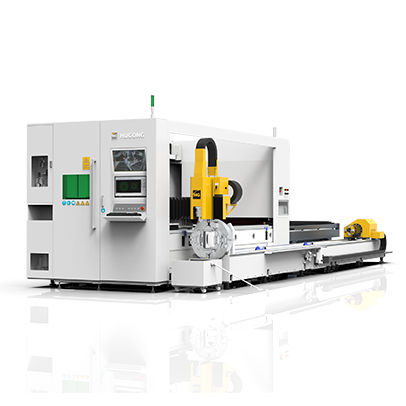
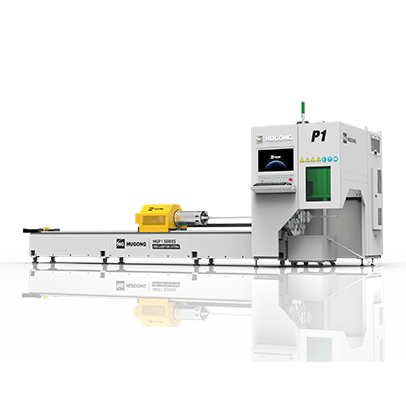
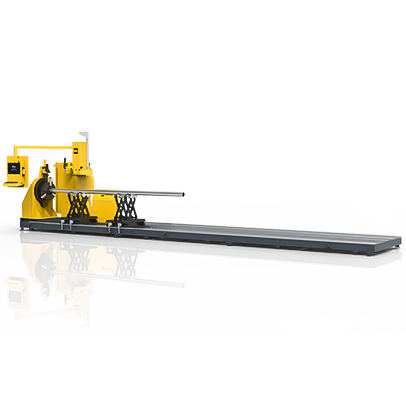
For example, the P2 tube laser features 1G acceleration, a chuck speed of up to 100 RPM, and an interpolation speed of up to 140 m/min.
These capabilities support fast positioning and tube rotation during cutting.
The production logic is particularly important when processing large numbers of similar components. Efficient loading, positioning, cutting, and unloading can reduce idle time and keep the machine working closer to its actual capacity.
What Makes Multi-Chuck Tube Processing Different?
For long or heavy tubes, a single clamping point may not provide sufficient stability throughout the cutting process.
A multi-chuck configuration can provide additional control over the workpiece.
HUGONG's HGP3 uses three chucks to coordinate feeding, clamping, cutting, and material handling.
During continuous production, the system can coordinate the unloading of a finished section with preparation for the next feeding cycle. This reduces unnecessary waiting between operations and supports a more continuous workflow.
For manufacturers processing heavy or complex tubes, this type of machine architecture can have a direct impact on production efficiency.
How Does Tube Laser Cutting Improve Material Utilization?
Material utilization is another important consideration when evaluating a tube laser cutting machine.
Waste can come from:
• Unused tube ends
• Poor nesting
• Inefficient part positioning
• Excessive remnant length
• Repeated manual cutting
Modern tube laser systems can optimize part layouts and coordinate chuck movement to reduce unnecessary remnants.
HUGONG's HGP3 is designed with material utilization as part of the overall processing strategy, with utilization of up to 98% under suitable production conditions.
Actual results still depend on tube length, part geometry, quantity, cutting layout, and production requirements.
Tube Laser Cutting Machine Applications
Tube laser cutting is widely used in industries where tubular and structural components require multiple machining features.
Typical applications include:
• Steel structures
• Construction machinery
• Agricultural machinery
• Fitness equipment
• Automotive components
• Transportation equipment
• Metal furniture
• General fabrication
The strongest applications are often those where tubes require holes, slots, notches, angled cuts, or other features before welding and assembly.
How Should You Test a Tube Laser Before Buying?
A machine demonstration is most useful when it uses your actual production requirements.
Before purchasing, consider testing:
• Your common tube material
• Typical wall thickness
• Maximum production thickness
• Round and square tubes
• Required holes and slots
• Notching or angled cutting
• Complex profiles
• Repeated production cycles
Evaluate more than cutting quality.
Check:
Cutting quality + dimensional accuracy + cycle time + material utilization + repeatability
It is also important to evaluate the complete production cycle rather than only the laser cutting time.
Tube Laser Cutting Machine Cost: What Really Matters?
The price of a tube laser cutting machine depends on more than laser power.
Important factors include:
• Processing range
• Laser power
• Chuck configuration
• Machine structure
• Material support
• Automation
• Software
• Cutting head
• Loading and unloading systems
A lower initial price does not necessarily mean a lower production cost.
When comparing machines, consider the total cost of ownership, including labor, material waste, energy consumption, maintenance, secondary processing, and machine utilization.
A machine that reduces several manual operations may provide greater long-term value even when its initial investment is higher.
Final Thoughts
Choosing a tube laser cutting machine should start with your parts and production requirements—not simply with laser power or machine price.
The right solution should match your tube dimensions, materials, wall thickness, production volume, accuracy requirements, and automation needs.
HUGONG approaches tube laser cutting by combining laser performance, multi-chuck control, high-speed motion, material support, and production-oriented automation.
From HGP3's three-chuck architecture and 7-axis linkage to P2's high-speed motion capabilities, these technologies are designed around one objective:
Make tube processing faster, more stable, and more efficient.
For first-time buyers, the best starting point is simple:
Define your parts. Analyze your production. Then choose the tube laser.

 Address:7177 Waiqingsong Road.Qingpu District , Shanghai , PRC
 Post Code: 201700
 E-mail:sales@hugong.com
 Tel:0086-21-51211666
 Fax:+86-21-69715399