

.jpg)
.jpg)
ISO Advances Laser Cleaning Standard for Steel Surface Preparation
Laser cleaning is moving toward a more defined role in industrial surface preparation as the International Organization for Standardization (ISO) advances a dedicated document for laser cleaning of steel surfaces.
The latest development is ISO/FDIS 8504-6, Preparation of steel substrates before application of paints and related products — Surface preparation methods — Part 6: Laser cleaning. The document is currently under development and has entered the formal approval phase. ISO lists it at Stage 50.00, following the approval of the Draft International Standard (DIS) for registration as a Final Draft International Standard (FDIS).
The development of ISO 8504-6 places laser cleaning within the broader framework of steel surface preparation and highlights its growing role beyond conventional rust and paint removal.
What Is ISO 8504-6 for Laser Cleaning?
ISO 8504-6 is being developed specifically for laser cleaning as a method of preparing steel surfaces before coating with paints and related products.
According to ISO, the document covers laser cleaning methods, their effectiveness and fields of application, as well as the equipment and procedures involved. It applies to new and corroded steel surfaces, including steel that is uncoated or has previously been coated.
The draft framework includes:
• Laser cleaning methods
• Pulsed laser cleaning
• Continuous-wave laser cleaning
• Laser cleaning equipment
• Cleaning procedures
• Preparation before laser cleaning
• Operations during laser cleaning
• Procedures after laser cleaning
The ISO draft also identifies key equipment components, including the laser source, beam delivery system, laser cleaning head and vacuum system.
This gives laser cleaning a more clearly defined position within the existing field of industrial steel surface preparation.
From Laser Rust Removal to Laser Surface Preparation
Laser rust removal remains one of the most recognized applications of laser cleaning. However, the technology is increasingly being considered as a broader laser surface preparation process.
Laser cleaning can target unwanted materials such as:
• Rust
• Paint
• Oxide layers
• Mill scale
• Oil and grease
• Dust and other contaminants
This makes laser cleaning relevant to processes that take place before coating, welding, bonding and other manufacturing operations.
Recent research and industrial applications are also exploring laser cleaning as a preparation process for joining and manufacturing. For example, 2026 research on laser cleaning for giga-casting highlighted short-pulsed laser sources for selective cleaning and joining preparation in automotive manufacturing.
The industry focus is therefore moving beyond a simple question of how to remove rust.
The broader question is:
How can a surface be prepared accurately and consistently for the next manufacturing process?
Pulsed Laser Cleaning for Precision Surface Treatment
One important feature of ISO/FDIS 8504-6 is its distinction between pulsed laser cleaning and continuous-wave laser cleaning.
The two approaches can serve different industrial requirements, depending on the substrate, contamination, coating and required cleaning result.
Pulsed laser cleaning is particularly relevant where controlled energy delivery and selective material removal are important.
Typical applications include:
• Laser rust removal
• Laser paint removal
• Oxide removal
• Weld seam cleaning
• Pre-weld surface preparation
• Pre-coating surface preparation
• Precision cleaning of metal components
Research published in 2026 also investigated MOPA-type nanosecond pulsed lasers for removing surface contaminants from nickel-based superalloys, highlighting the importance of controlling laser parameters to balance contaminant removal and substrate integrity.
This illustrates why laser cleaning should be viewed as a process rather than simply a machine specification.
Laser power alone does not determine the cleaning result. Pulse width, repetition rate, scanning speed, line spacing and other parameters can all influence the interaction between the laser, contaminant and substrate.
Why Laser Surface Preparation Matters Before Coating
Surface preparation is a critical stage before protective coatings are applied to steel.
ISO 8504-6 specifically addresses laser cleaning for the preparation of steel surfaces before coating with paints and related products.
The condition of the substrate can include corrosion, existing coatings and other contaminants. Proper preparation therefore becomes an important part of the overall coating process.
Laser cleaning provides an additional surface preparation method for manufacturers looking to remove unwanted layers from metal surfaces without relying solely on conventional abrasive or chemical processes.
The objective is not simply to make the workpiece visually clean.
Instead, laser surface preparation focuses on creating a controlled surface condition that is suitable for the next manufacturing step.
Laser Cleaning Moves Toward Standardized Industrial Processes
The development of ISO 8504-6 is significant because it places laser cleaning within an established international framework for steel surface preparation.
The ISO 8504 series already includes standardized surface preparation methods such as acid pickling and water jet cleaning. ISO currently lists Part 6, Laser Cleaning, as under development at Stage 50.00.
At the same time, the development of a standard does not mean that one fixed laser parameter set will apply to every material or application.
Laser cleaning conditions can vary according to:
• Substrate material
• Contaminant type
• Contaminant thickness
• Laser source
• Pulse characteristics
• Cleaning speed
• Scanning strategy
• Required surface condition
As laser cleaning technology continues to develop, standardized terminology, equipment descriptions and process guidance can help manufacturers communicate more clearly about the technology and its applications.
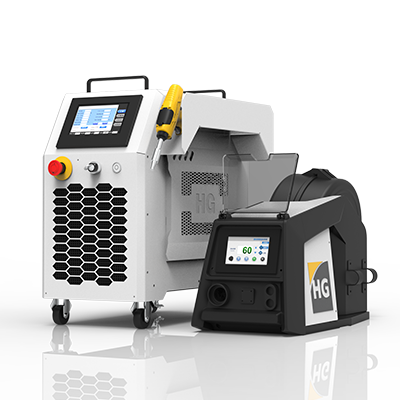
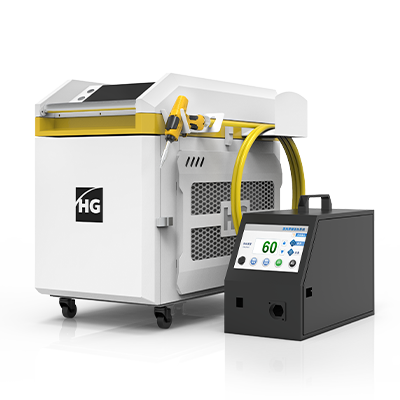
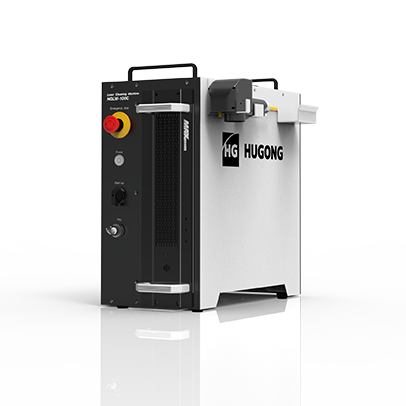
HUGONG HGLC MOPA Laser Cleaning Machine
As laser cleaning expands from rust removal toward broader surface preparation applications, MOPA technology provides manufacturers with flexible control over pulsed laser cleaning processes.
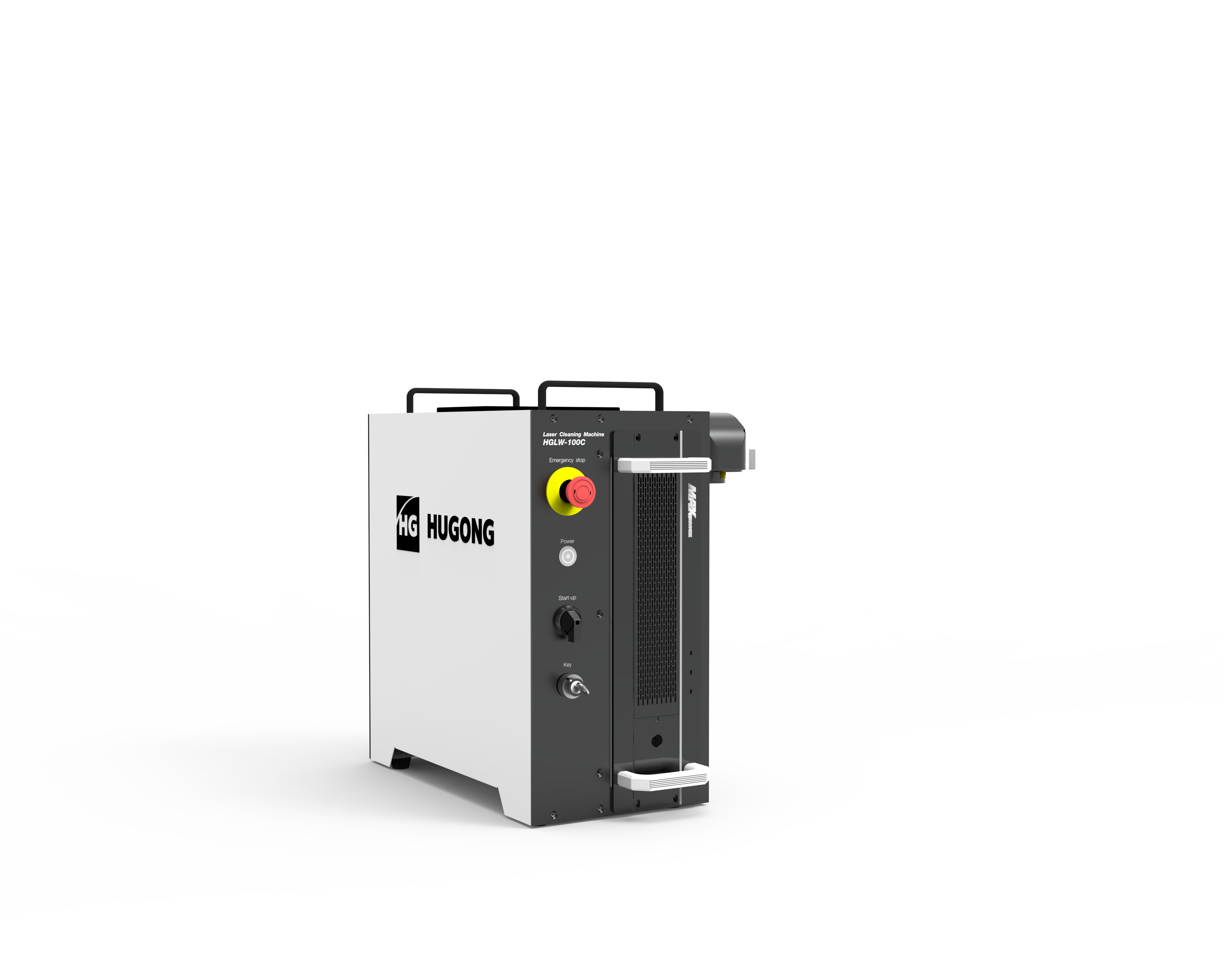
HUGONG's HGLC-100/200/300 MOPA Hand Held Laser Cleaning Machine is designed for industrial applications including rust removal, paint removal, glue removal, oil removal, oxide removal and fine cleaning.
The system uses MOPA laser technology, with periodic pulse peak power of up to 10 kW, while maintaining stable maximum peak power under different pulse-width conditions.
Key specifications include:
• MOPA laser technology
• 1060–1070 nm laser wavelength
• Double-axis swing
• 180 × 180 mm cleaning range
• Air cooling
• 0.85 kg cleaning torch body
• 5 m cable
• 1P AC 220 V input
• HGLC-100: 0.5 kW maximum power consumption
• HGLC-200: 1.0 kW maximum power consumption
• HGLC-300: 1.3 kW maximum power consumption
The handheld configuration allows operators to move between workpieces and cleaning areas, making the system suitable for flexible industrial surface cleaning and preparation tasks.
What ISO 8504-6 Means for the Future of Laser Cleaning
The development of ISO/FDIS 8504-6 represents another step in the evolution of laser cleaning as an industrial surface preparation technology.
The technology is increasingly being discussed not only in terms of laser rust removal or laser paint removal, but also in terms of steel surface preparation before coating and other manufacturing processes.
For manufacturers, this shift creates a broader way to evaluate laser cleaning technology: not simply by how quickly a contaminant can be removed, but by how effectively the cleaning process can be integrated into the overall production workflow.
ISO/FDIS 8504-6 is still under development and has not yet reached the publication stage of the ISO lifecycle. Its current progress nevertheless provides an important reference point for the continued development of laser cleaning as a surface preparation method.
As the technology develops, laser cleaning is moving from a standalone cleaning operation toward a more clearly defined role in industrial surface preparation.
HUGONG continues to develop laser cleaning solutions for applications ranging from rust, paint and oxide removal to precision cleaning and surface preparation.

 Address:7177 Waiqingsong Road.Qingpu District , Shanghai , PRC
 Post Code: 201700
 E-mail:sales@hugong.com
 Tel:0086-21-51211666
 Fax:+86-21-69715399