

.jpg)

.jpg)
Heavy Tube Laser Cutting: Trends in Continuous Production
As heavy tube fabrication becomes more automated, manufacturers are focusing not only on cutting performance, but also on material handling, machine utilization and production continuity.
The metal fabrication industry is placing greater emphasis on automation, production efficiency and more consistent manufacturing processes. In heavy tube processing, these requirements are particularly important as manufacturers work with larger profiles, heavier workpieces and increasingly complex cutting applications.
For heavy tube fabrication, productivity is not determined by cutting speed alone.
The overall production cycle also depends on how efficiently raw material is loaded, positioned, clamped, processed and unloaded. When these operations are performed separately, waiting and material-handling time can accumulate throughout a production shift.
This is driving greater attention toward heavy tube laser cutting solutions that combine cutting performance with automated material handling and continuous production.
Heavy Tube Processing Requires More Than Cutting Speed
Laser cutting speed is an important factor when evaluating a heavy tube laser cutting machine. However, the actual output of a production system depends on the complete processing cycle.
A typical heavy tube cutting workflow includes:
Loading → Feeding → Positioning → Clamping → Cutting → Unloading → Reloading
Each step can affect overall production efficiency.
For lightweight or short tubes, material handling may represent only a small part of the cycle. Heavy tubes are different. Their weight and dimensions can make loading, supporting, positioning and unloading more demanding.
Even when the cutting process itself is fast, unnecessary pauses between operations can reduce overall machine utilization.
This means that improving heavy tube production efficiency requires attention to the entire material flow, rather than focusing only on laser cutting speed.
The Production Challenges of Heavy Tube Cutting
Heavy tubes are widely used in applications such as:
• Steel structure fabrication
• Construction machinery
• Heavy equipment
• Transportation equipment
• Industrial machinery
• Energy-related equipment
• General metal fabrication
These applications often involve large-diameter or heavy-wall tubes that require stable support throughout the cutting process.
As workpiece weight increases, several factors become increasingly important:
Stable support
Heavy tubes need reliable support during feeding, positioning and cutting to help maintain processing stability.
Accurate positioning
Large workpieces must be positioned and clamped reliably before cutting begins.
Efficient material handling
Moving heavy raw material and finished parts can become a significant part of the overall production cycle.
Continuous production
Repeated loading, unloading and repositioning operations can create downtime if they are not properly coordinated.
For this reason, the development of heavy tube laser cutting is moving beyond the cutting process itself toward more integrated material handling and production workflows.
From Cutting Speed to Production Continuity
A common production sequence looks like this:
Cut → Stop → Unload → Reload → Position → Cut
When each operation has to wait for the previous one to finish, the production cycle contains unavoidable idle periods.
A more coordinated workflow aims to move toward:
Cut → Unload → Feed → Position → Cut
The objective is not necessarily to eliminate every individual handling step, but to coordinate these operations more efficiently.
When unloading, feeding and positioning can overlap with different stages of the cutting cycle, the production process can become more continuous.
For manufacturers processing heavy tubes in batches, reducing these interruptions can help make better use of available machine time.
This is one reason why automated material handling has become an important part of modern heavy tube laser cutting systems.
Automation in Heavy Tube Laser Cutting
Automation in tube processing is no longer limited to simply loading raw material into a machine.
Modern systems can integrate:
Loading → Feeding → Positioning → Clamping → Cutting → Unloading
into a coordinated production workflow.
For heavy tube applications, this approach can reduce repetitive manual handling and improve the continuity of material movement through the machine.
The role of automation is particularly relevant when processing long or heavy workpieces, where manual handling can require additional time, space and operator involvement.
Instead of treating every production cycle as an independent operation, an automated system can coordinate different stages of material handling around the cutting process.
This creates a more continuous production flow and provides manufacturers with another way to improve overall equipment utilization.
Three-Chuck Technology for Heavy Tube Processing
As tube size and weight increase, maintaining stable control of the workpiece throughout the cutting process becomes increasingly important.
A three-chuck tube laser cutting system provides multiple clamping and support points along the tube.
Beyond supporting the workpiece, multiple chucks can also participate in different stages of material movement.
During production, one chuck can feed the next section of material while other chucks continue to support or position the workpiece being processed.
When a finished section is ready for unloading, the unloading operation can be coordinated with the preparation of the next section of material.
This helps connect different stages of the production cycle and reduce unnecessary waiting between operations.
For heavy tube applications, three-chuck technology provides a way to combine stable workpiece handling with a more continuous production workflow.
HUGONG HGP3: Supporting Continuous Heavy Tube Production
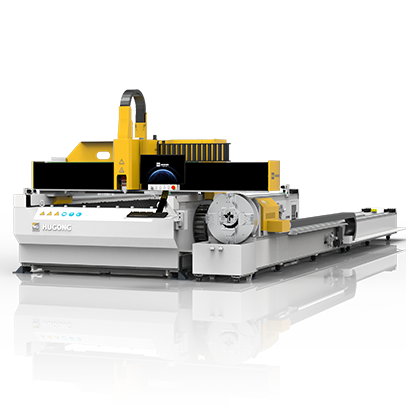
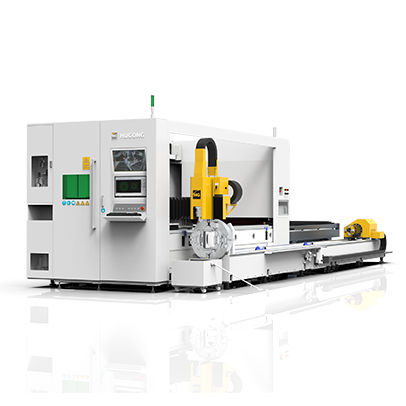
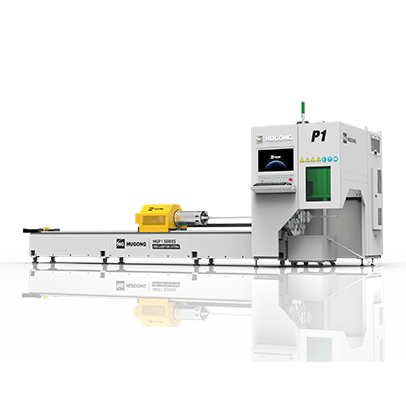
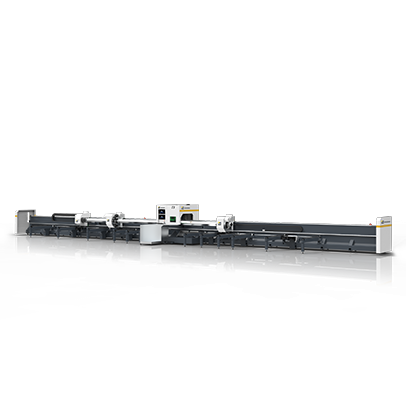
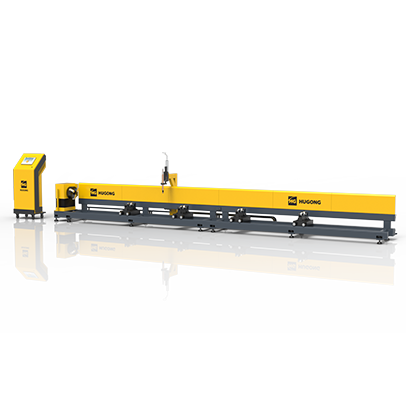
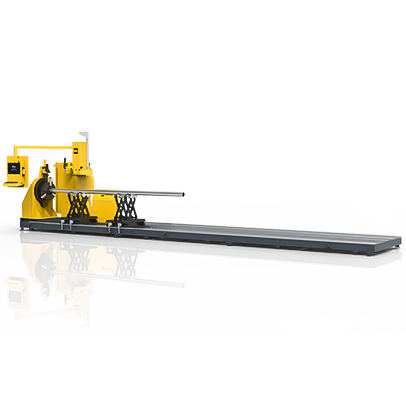
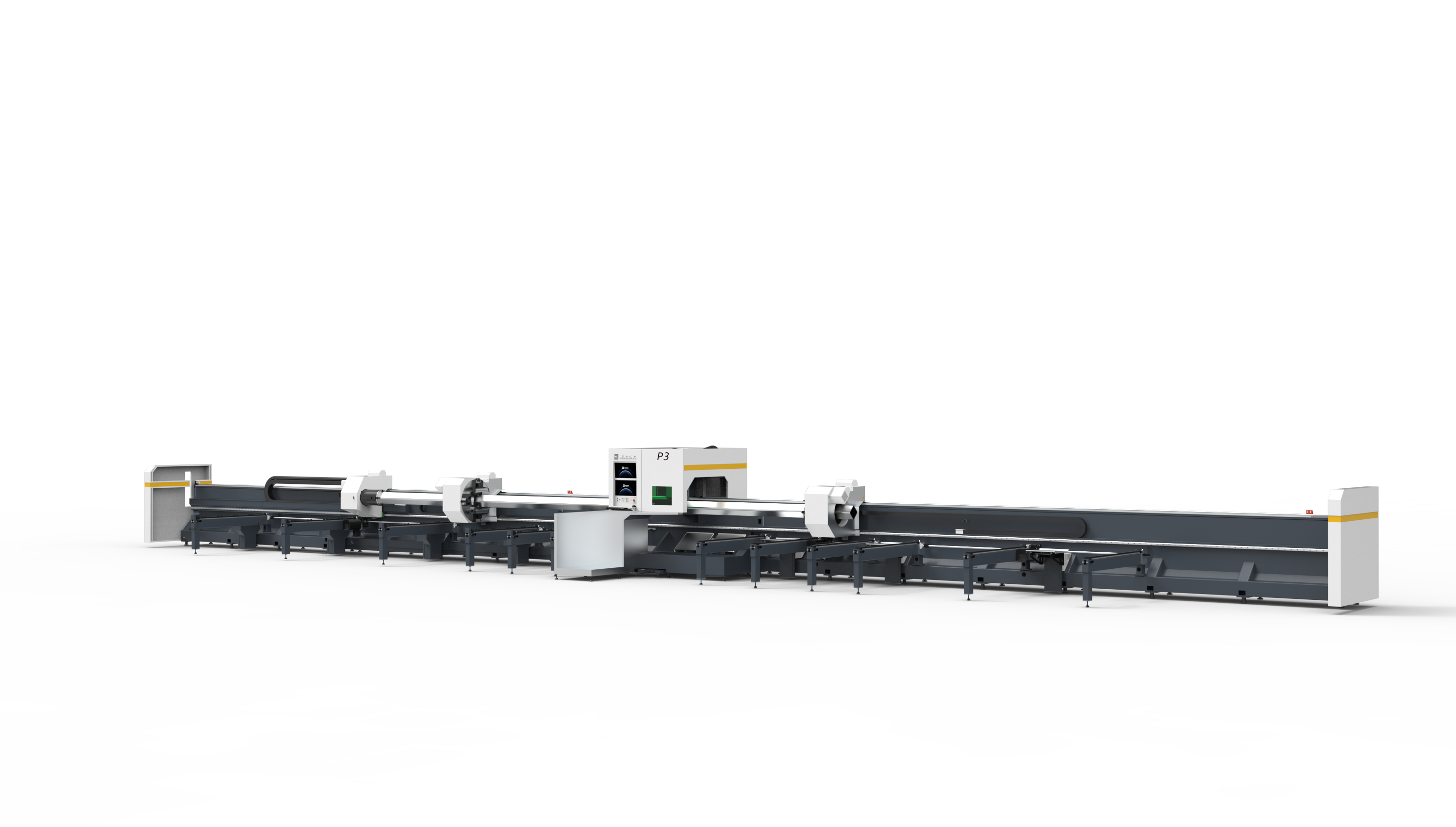
Against this background, HUGONG has developed the HGP3 Tube Laser Cutting Machine for heavy tube processing applications.
The HGP3 integrates a three-chuck tube cutting system, automated loading and unloading, and servo-assisted unloading support to coordinate material movement throughout the production cycle.
During processing, the third chuck works together with the servo-assisted unloading support to unload completed tube sections.
At the same time, the first chuck can begin feeding the next section of raw material.
The middle chuck remains available for positioning and clamping, helping prepare the material for the next cutting cycle.
This coordinated process connects:
Cutting → Unloading → Feeding → Positioning → Cutting
into a more continuous workflow.
Instead of waiting for one complete production cycle to finish before starting the next, different material-handling operations can be coordinated around the cutting process.
The result is a system designed to reduce unnecessary waiting and support more continuous heavy tube production.
Built for Heavy Tube Applications
The HGP3-9036C / HGP3-12036C configurations support the processing of large and heavy tube profiles.
Key specifications include:
| Specification | HGP3 |
|---|---|
| Round Tube Diameter | Φ20–360 mm |
| Square Tube Size | Up to 360 × 360 mm |
| Maximum Tube Length | 9,500 mm / 12,500 mm |
| Maximum Unloading Length | 6 m / 9 m |
| Maximum Chuck Speed | 60 rpm |
| Maximum Load Capacity | 1,200 kg |
These capabilities allow the HGP3 to handle applications where tube size, workpiece weight and automated material handling are important considerations.
The system also supports zero-tail material cutting, helping reduce residual material at the end of the tube and improve material utilization.
For heavy tube fabrication, material utilization can have a direct impact on production costs, particularly when processing large quantities of expensive metal profiles.
Why Continuous Production Matters for Heavy Tube Fabrication
For heavy tube manufacturers, production efficiency is influenced by more than the laser cutting process itself.
Important factors can include:
• Raw material loading time
• Tube feeding
• Workpiece positioning
• Clamping and support
• Cutting time
• Finished-part unloading
• Operator involvement
• Waiting time between cycles
• Material utilization
• Overall machine utilization
Looking at these factors as one connected production cycle provides a more complete understanding of manufacturing efficiency.
A heavy tube laser cutting machine is therefore not simply a tool for making holes and profiles.
It can also become part of a broader automated material-processing workflow.
Toward More Efficient Heavy Tube Laser Cutting
As heavy tube fabrication becomes increasingly automated, manufacturers are looking beyond individual cutting parameters and paying greater attention to the complete production process.
For heavy and large tube applications, stable workpiece support, reliable positioning, efficient material handling and production continuity all play important roles.
The HUGONG HGP3 brings these requirements together through its:
• Three-chuck tube cutting system
• Automated loading and unloading
• Servo-assisted unloading support
• Large tube processing capability
• 1,200 kg maximum load capacity
• Zero-tail material cutting
Its approach focuses not only on cutting the current workpiece, but also on how the next production cycle can begin with less unnecessary waiting.
For manufacturers involved in heavy tube laser cutting, the future of production efficiency is increasingly connected to the entire material flow—from loading and positioning to cutting and unloading.
More coordinated material handling. More continuous production. More efficient heavy tube processing.

 Address:7177 Waiqingsong Road.Qingpu District , Shanghai , PRC
 Post Code: 201700
 E-mail:sales@hugong.com
 Tel:0086-21-51211666
 Fax:+86-21-69715399