

.jpg)
.jpg)
The role of fiber laser cutting in heavy metal fabrication is changing.
For years, fiber laser cutting has been widely associated with thin and medium-thickness sheet metal. As laser power continues to increase, however, manufacturers are increasingly exploring laser processing for thick steel plate, large-format components and heavy-duty fabrication.
This shift is changing the conversation around laser cutting.
The question is no longer simply “How fast can a laser cut?”
For heavy fabrication, manufacturers are increasingly asking:
Can it cut thick plate consistently? Can it maintain edge quality? Can it support continuous production? And can one machine handle large and demanding workpieces?
These questions are becoming particularly relevant for applications involving 50mm-class and thicker steel plate.
The Thick Plate Challenge Is Becoming a Production Issue
Cutting thicker steel is fundamentally different from cutting thin sheet.
As material thickness increases, molten metal has a longer path to travel through the kerf. Cutting parameters become more sensitive, while piercing, slag removal, assist-gas control and heat management become increasingly important.
Machine structure also becomes more relevant.
A large and heavy steel plate places different demands on the cutting system compared with conventional sheet-metal production. The laser source, cutting head, motion system and machine bed all need to work together as one process.
This is why the development of high-power laser cutting is moving beyond simply increasing the wattage of the laser source.
High Power Is Only Part of the Equation
Recent developments across the global laser cutting industry illustrate this direction.
Laser manufacturers are continuing to move toward higher-power fiber laser systems, larger working formats and more advanced process control. At the same time, developments in cutting heads, assist-gas management, beam control and automation are helping manufacturers extend laser cutting into increasingly demanding material thicknesses.
This trend reflects a broader shift in the industry: high-power laser cutting is moving beyond conventional sheet-metal applications and into more demanding thick-plate and heavy-duty manufacturing.
Large Format Is Becoming Equally Important
Another development is taking place alongside the move toward higher power: larger machine formats.
Heavy fabrication industries often work with large steel plates and oversized structural components. Processing these parts efficiently can require longer cutting ranges, greater machine rigidity and fewer repositioning operations.
The market is responding accordingly.
Bystronic, for example, has expanded its fiber laser systems into XXL formats designed for larger workpieces, while TRUMPF's 2026 strategic partnership with Cutlite focuses on customized large-format and very-high-power laser cutting systems.
For manufacturers, this means that the development of high-power laser cutting is increasingly connected with another objective:
processing larger and thicker components without turning every job into a special process.
Where Does This Leave 50mm+ Steel Plate?
The 50mm range is an interesting point in this transition.
At this thickness, manufacturers may still consider multiple cutting technologies depending on material, production requirements, part geometry and available equipment.
Laser cutting is not automatically the solution for every thick-plate application.
However, the development of high-power fiber laser technology is expanding the range of applications that can be considered for laser processing.
For manufacturers, this creates a new opportunity to evaluate whether laser cutting can replace or complement conventional processes for selected thick-plate components.
The decision depends on more than maximum thickness.
Cutting speed, edge quality, slag formation, gas consumption, material utilization, machine format and production consistency all need to be considered.
HUGONG Expands Its Focus on Heavy-Duty Laser Cutting
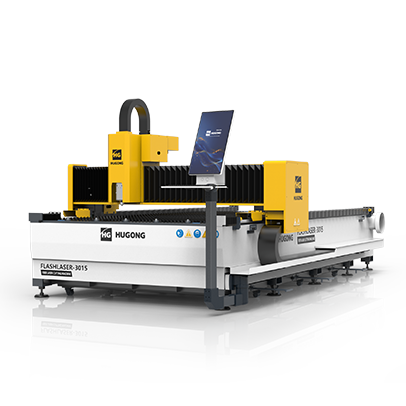
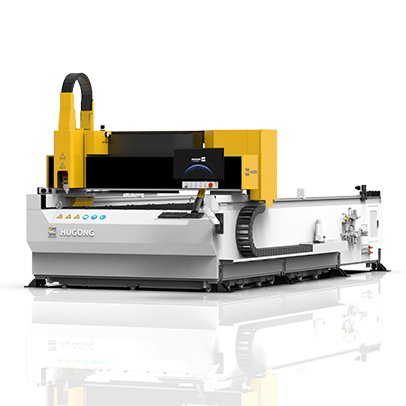
Against this industry background, HUGONG is continuing to develop its high-power laser cutting portfolio for heavy fabrication applications.
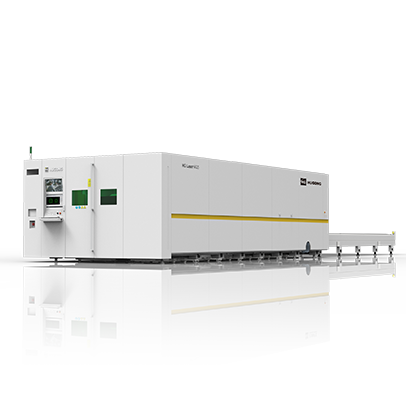
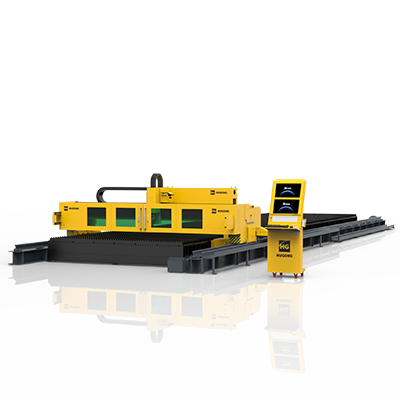
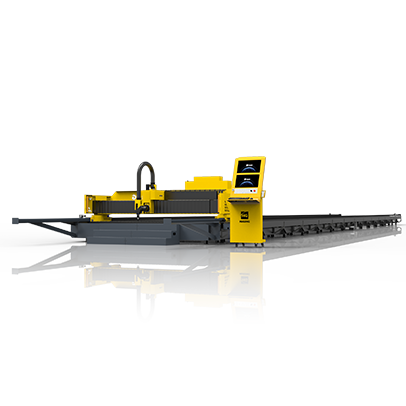
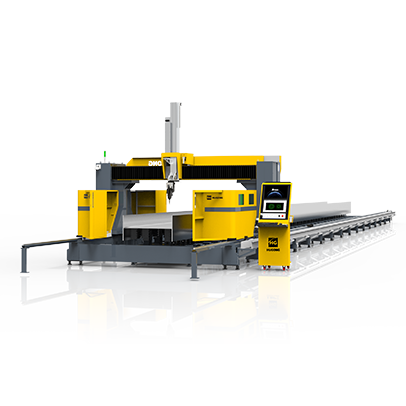
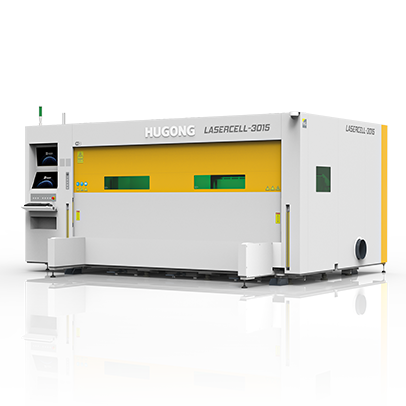
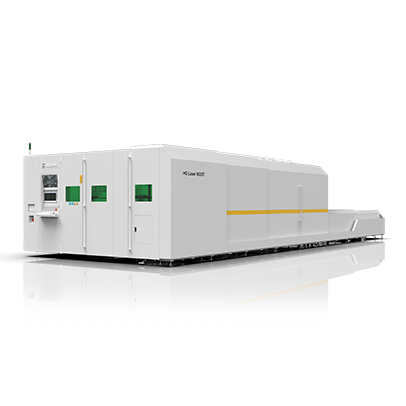
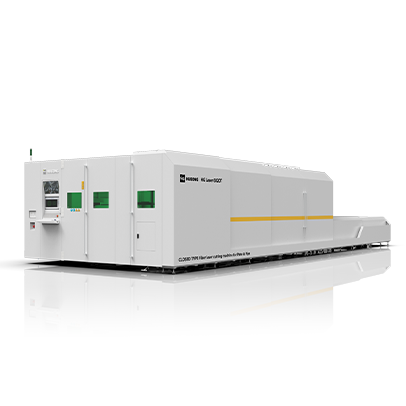
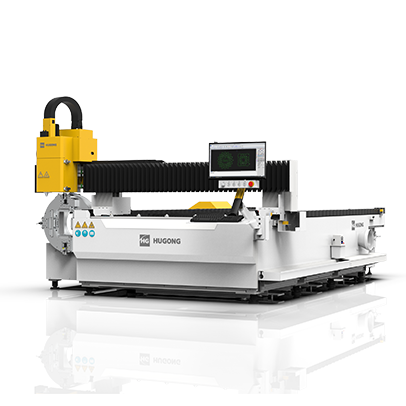
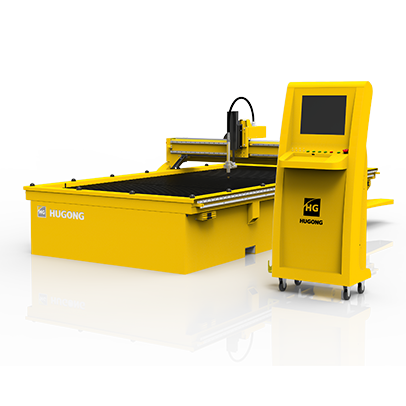
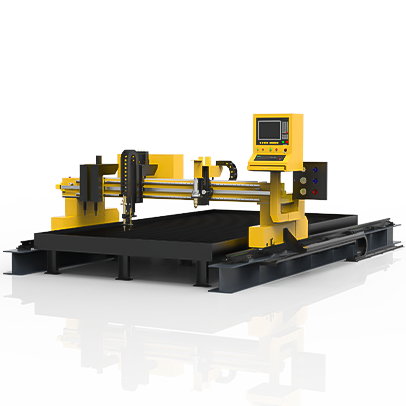
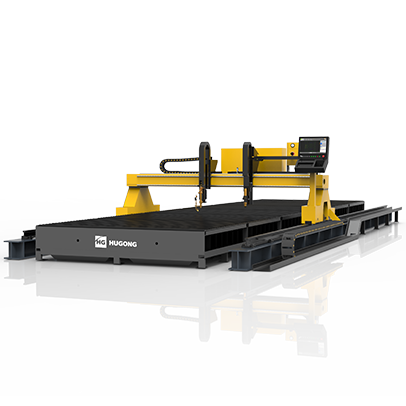
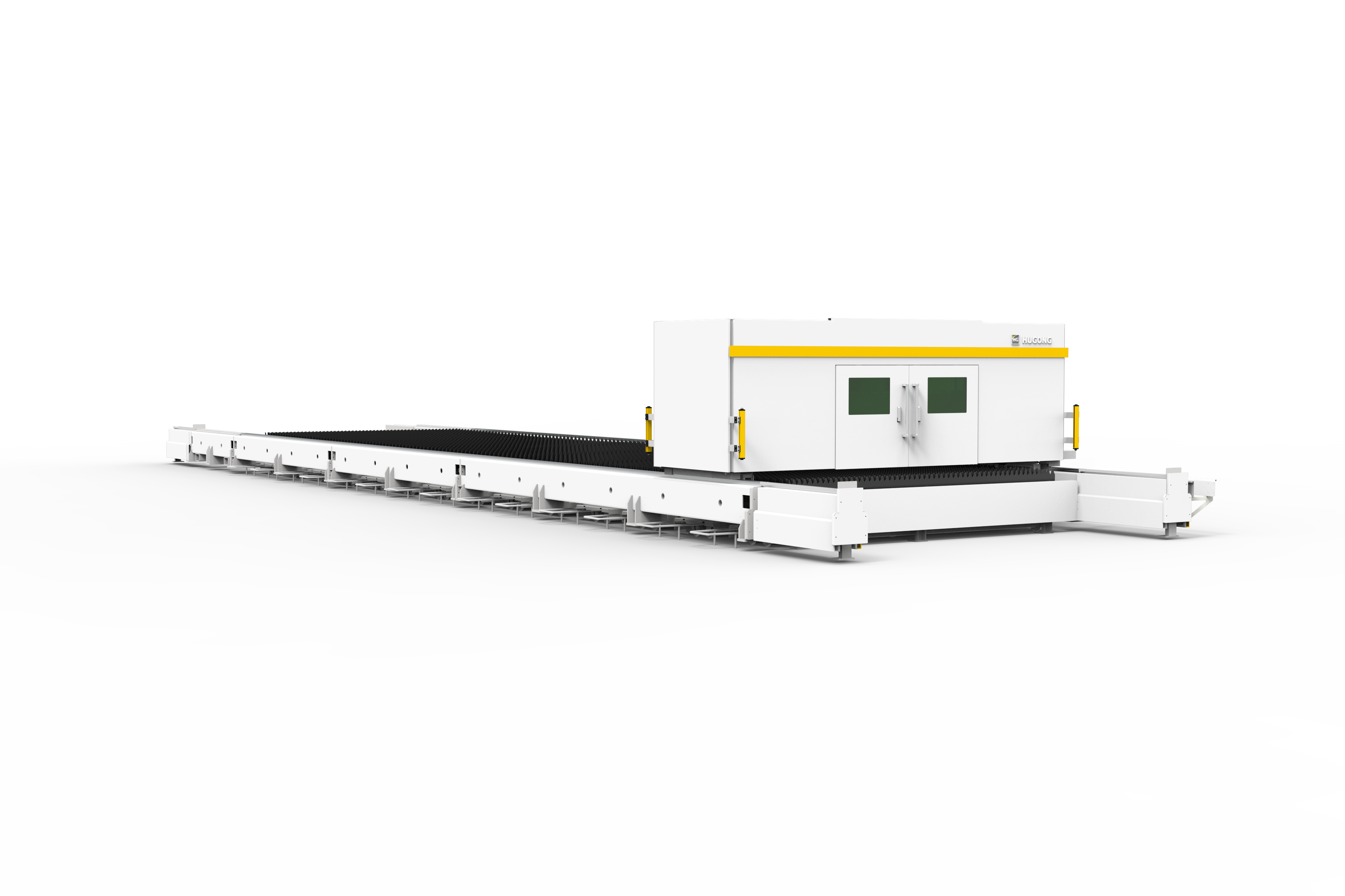
The HGLX Series represents HUGONG's approach to large-format and high-power plate cutting, with configurations designed around the requirements of heavy steel fabrication.
The platform combines high-power laser processing with a heavy-duty gantry structure, large working formats and process technologies such as autofocus and high-pressure assist gas.
Depending on configuration, HGLX machines can reach 50 m/min positioning speed and 1G maximum acceleration, while different machine formats provide extended X- and Y-axis working ranges for large steel plates.
Rather than positioning the machine simply around a maximum cutting thickness, HUGONG's focus is on the broader production challenge: how to make thick-plate laser cutting practical for continuous industrial manufacturing.
From “Can It Cut?” to “Can It Produce?”
This may be the more important change taking place in the thick-plate laser cutting market.
A successful demonstration on a single 50mm steel plate can show that a laser has sufficient processing capability.
Industrial production requires much more.
Manufacturers need to consider whether the machine can:
• Maintain consistent cutting quality
• Control slag during continuous production
• Process large workpieces efficiently
• Maintain positioning accuracy
• Manage assist gas effectively
• Support different material and thickness requirements
• Operate reliably over long production cycles
This is particularly important in heavy equipment, construction machinery, structural steel, energy equipment and other industries where thick plate is part of everyday production.
What Comes Next for Thick Plate Laser Cutting?
The development of high-power fiber laser technology suggests that the boundary between conventional sheet-metal laser cutting and heavy plate processing will continue to evolve.
Higher power is opening new processing possibilities, while improvements in cutting heads, beam control, gas management, machine structures and automation are helping turn that power into usable production capability.
For manufacturers considering laser cutting for 50mm, 60mm or thicker steel, the key question may therefore be less about a single maximum thickness number and more about the complete production process.
Power matters. But for heavy-duty manufacturing, stability, process control and machine scale matter too.
HUGONG will continue to develop laser cutting solutions for manufacturers moving toward thicker materials, larger workpieces and higher production demands.

 Address:7177 Waiqingsong Road.Qingpu District , Shanghai , PRC
 Post Code: 201700
 E-mail:sales@hugong.com
 Tel:0086-21-51211666
 Fax:+86-21-69715399