

.jpg)
.jpg)
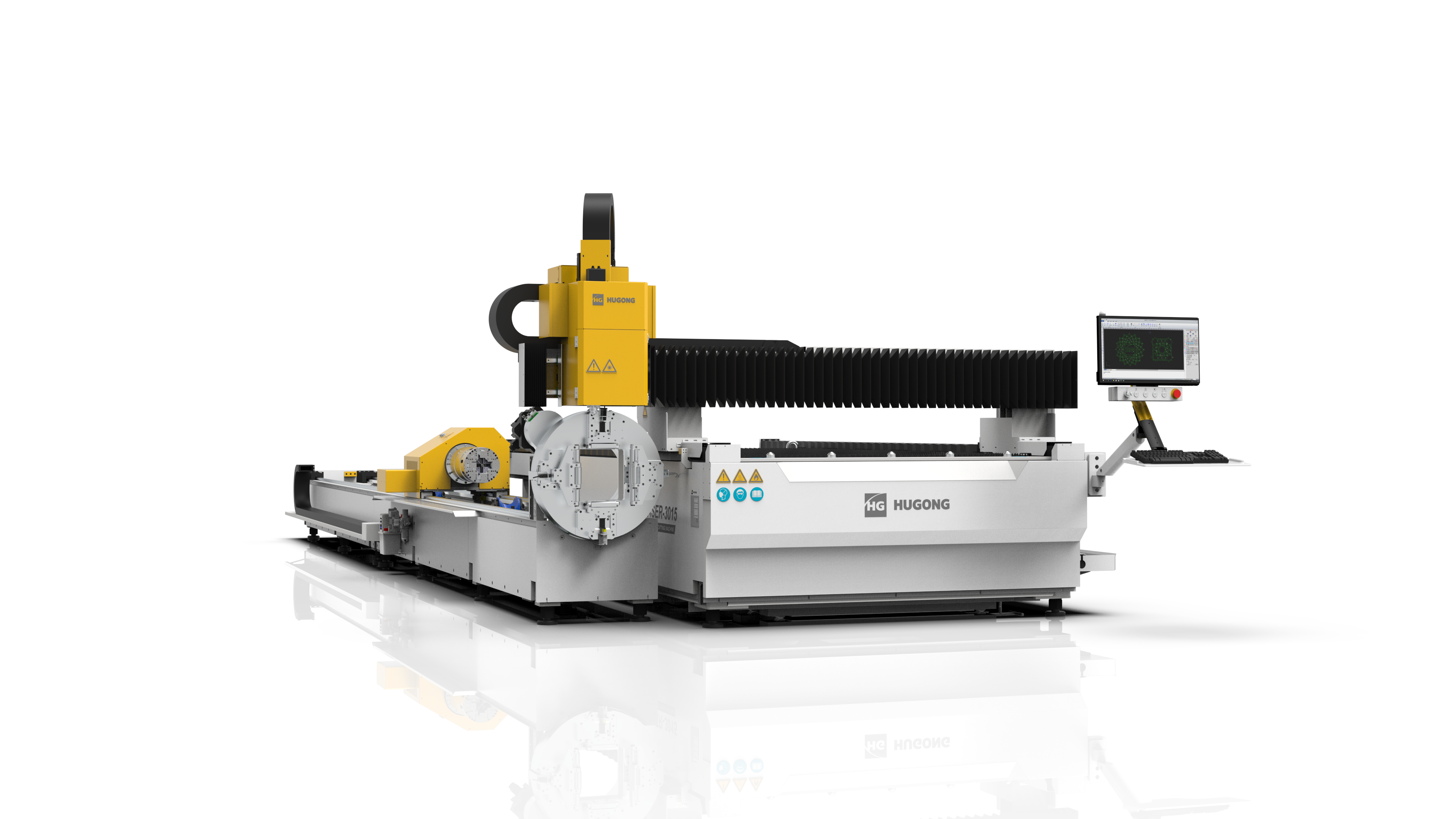
A plate and tube fiber laser cutting machine is an integrated CNC laser system that processes both flat sheet metal and tubular/structural profiles on a single platform. By combining two cutting capabilities into one machine, manufacturers can reduce equipment investment by up to 40%, save floor space, and improve production flexibility for mixed-material orders. Leading systems like the FLASHLASER-T Series offer laser power from 1.5 kW to 6 kW, positioning accuracy of ±0.05 mm, and support for sheet sizes up to 6000 × 2500 mm.
As manufacturing continues to move toward automation and higher productivity, the demand for versatile laser cutting equipment is growing rapidly. Instead of investing in separate machines for sheet metal and tube processing, many fabricators are choosing integrated plate and tube fiber laser cutting machines to improve flexibility, save floor space, and reduce production costs.
This guide explains how plate and tube laser cutting works, common processing challenges and their solutions, key industry applications, cost-benefit comparisons, and what to look for when selecting a machine — with detailed specifications of the FLASHLASER-T Series.
What Is a Plate & Tube Fiber Laser Cutting Machine?
A plate and tube fiber laser cutting machine (also referred to as a sheet and tube laser cutter or integrated laser cutting system) combines flat sheet metal cutting and tube/profile cutting into a single CNC laser platform. Unlike traditional production lines that require different machines for flat sheets and structural tubes, an integrated solution allows manufacturers to process multiple material types without changing production equipment.
Supported Materials
| Material | Common Thickness Range | Typical Applications |
|---|---|---|
| Carbon Steel | 1–25 mm | Structural frames, brackets, machinery parts |
| Stainless Steel | 1–12 mm | Food equipment, medical devices, architectural elements |
| Aluminum | 1–10 mm | Automotive components, signage, lightweight structures |
| Galvanized Steel | 1–8 mm | HVAC ducts, enclosures, outdoor equipment |
| Brass | 1–6 mm | Decorative items, electrical contacts |
| Copper | 1–5 mm | Electrical components, heat exchangers |
Note: Thickness ranges depend on laser power. Higher wattage enables thicker cuts.
Processable Tube & Profile Types
• Round Tubes — Most common profile for structural, furniture, and automotive applications
• Square Tubes — Widely used in framework, supports, and architectural structures
• Rectangular Tubes — Ideal for construction and machinery frames requiring directional strength
• Oval Tubes — Used in decorative applications and specialized furniture design
• Angle Steel — Structural brackets, supports, and connection components
• Channel Steel — Building frames, vehicle chassis, and heavy-duty supports
How Does Plate & Tube Fiber Laser Cutting Work?
Plate and tube fiber laser cutting uses a high-power fiber laser source focused through a lens to melt, burn, or vaporize material along a programmed path. An assist gas (typically oxygen, nitrogen, or air) blows away the molten material, creating a clean cut edge.
Sheet Metal Cutting Mode
In sheet cutting mode, the laser head moves along the X and Y axes over a flat exchange table. The material rests on a slat support system, and the cutting head maintains optimal focus distance through a capacitive height follower. This mode handles flat sheets of carbon steel, stainless steel, aluminum, and other metals.
Tube Cutting Mode
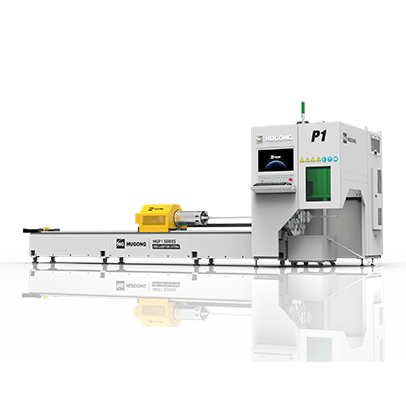
In tube cutting mode, the material is clamped by precision chucks at one or both ends. A rotary axis (commonly the C-axis) rotates the tube while the laser head moves along its length. This coordinated multi-axis motion enables the cutting of holes, slots, bevels, and complex contours on tubular profiles. Modern systems support automatic chuck switching and tube loading/unloading for continuous production.
Key Technical Parameters That Affect Cutting Quality
| Parameter | Effect on Cutting Quality | Optimization Tip |
|---|---|---|
| Laser Power | Determines maximum cutting thickness and speed | Match power to material type and thickness |
| Focus Position | Affects cut width, edge quality, and dross formation | Adjust focus based on material thickness |
| Assist Gas Pressure | Influences edge smoothness and dross removal | Higher pressure for thicker materials; nitrogen for clean edges |
| Cutting Speed | Too fast = incomplete cut; too slow = excessive melting | Follow parameter charts; adjust for material condition |
| Nozzle Condition | Affects gas flow pattern and focus alignment | Inspect regularly; replace worn nozzles |
Common Challenges in Plate & Tube Laser Cutting & How to Solve Them
Although fiber laser cutting is highly accurate, production quality depends on proper machine configuration and process control. Below are the most common challenges and practical solutions.
Challenge 1: Poor Edge Quality
A rough or dross-covered edge is usually caused by incorrect cutting parameters.
Possible causes:
• Incorrect focus position
• Improper assist gas pressure
• Excessive cutting speed
• Contaminated protective lens
• Misaligned or worn nozzle
Solution: Systematically optimize focus position, gas pressure, and cutting speed according to the material parameter chart. Clean or replace the protective lens regularly. Ensure nozzle alignment is checked during routine maintenance. Using nitrogen as assist gas for stainless steel and aluminum produces cleaner edges with minimal dross.
Challenge 2: Tube Positioning Accuracy
Tube processing requires accurate rotation and clamping. If positioning accuracy is insufficient, problems may include:
• Hole misalignment along the tube length
• Uneven slot dimensions
• Poor assembly accuracy in downstream welding
Solution: Use machines equipped with precision self-centering chucks and stable servo-drive systems. Ensure tube straightness meets specifications before cutting. Regularly calibrate the rotary axis and check chuck clamping force. High-quality systems maintain positioning accuracy of ±0.05 mm throughout long production runs.
Challenge 3: Heat-Affected Zone (HAZ)
Although fiber lasers generate significantly less heat than plasma or flame cutting, improper parameter settings can still enlarge the heat-affected zone, affecting material properties near the cut edge.
A smaller HAZ provides:
• Better dimensional accuracy
• Reduced thermal deformation
• Improved weld preparation
• Less post-processing required
Solution: Select appropriate laser power and optimize cutting speed to minimize heat input. Use nitrogen assist gas for materials sensitive to oxidation. For thin-walled tubes, reduce power and increase speed to limit thermal effects. Proper pulse settings can also help control HAZ on sensitive materials.
Integrated vs. Separate Machines: Cost-Benefit Comparison
One of the most common decisions manufacturers face is whether to invest in a single integrated plate and tube machine or purchase separate sheet and tube laser cutters. The following comparison breaks down the key differences:
| Factor | Integrated Plate & Tube Machine | Separate Sheet + Tube Machines |
|---|---|---|
| Equipment Investment | Lower (single machine purchase) | Higher (two separate machines) |
| Floor Space Required | ~50% less | Double footprint |
| Production Flexibility | High — switch between sheet and tube | Lower — dedicated to one material type |
| Setup & Changeover Time | Quick mode switching | No changeover needed |
| Throughput (Single Material) | Moderate | Higher (dedicated operation) |
| Maintenance Cost | One system to maintain | Two systems to maintain |
| Operator Requirements | One operator can manage both modes | May require separate operators |
| Best Suited For | Mixed production, job shops, small-to-mid volume | High-volume dedicated production |
Key Takeaway:
• For manufacturers handling diverse product orders with mixed sheet and tube processing needs, an integrated machine typically delivers 30–40% cost savings compared to purchasing two separate machines.
• For high-volume, single-material production (e.g., cutting only sheet metal 24/7), dedicated machines may offer higher throughput.
• The integrated approach is ideal for job shops, custom fabricators, and small-to-medium manufacturers who need maximum flexibility per square meter of workshop space.
Industry Applications of Plate & Tube Laser Cutting
Plate and tube laser cutting is widely used across many industries where both flat sheet components and tubular structures are required:
• Steel Structure Fabrication — Processing beams, channels, brackets, and connection plates with high dimensional accuracy for building and infrastructure projects.
• Construction Machinery — Manufacturing structural components, machine frames, support parts, and reinforced plates for excavators, loaders, and cranes.
• Furniture Manufacturing — Cutting decorative tubes, frames, brackets, and customized metal furniture components with intricate patterns and clean edges.
• Agricultural Equipment — Producing durable tubular frames, sheet metal housings, and structural assemblies for tractors, harvesters, and farming implements.
• Fitness Equipment — Processing round and rectangular tubes for gym equipment frames, weight stacks, and support structures with repeatable accuracy.
• Automotive Components — Manufacturing lightweight structural parts, chassis components, brackets, and exhaust system elements requiring high precision.
FLASHLASER-T Series: Integrated Plate & Tube Laser Cutting Machine
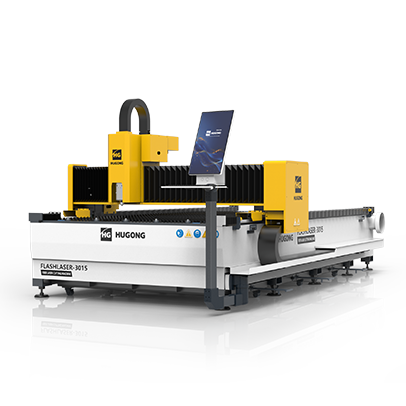
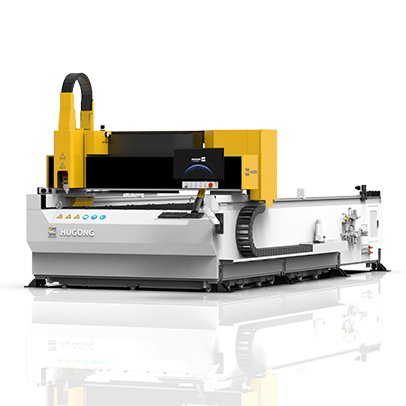
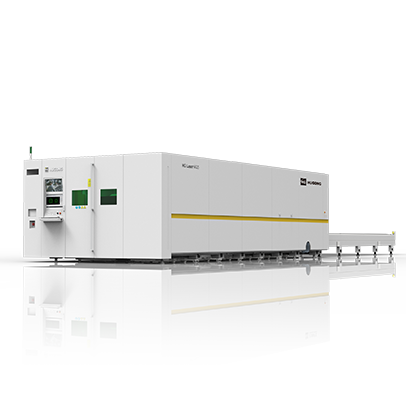
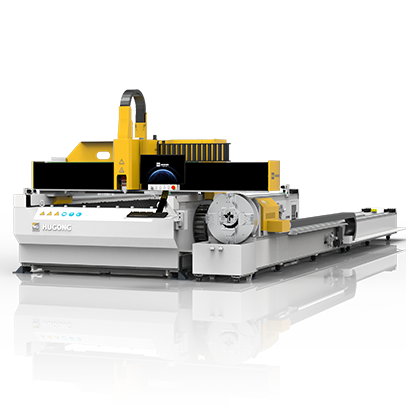
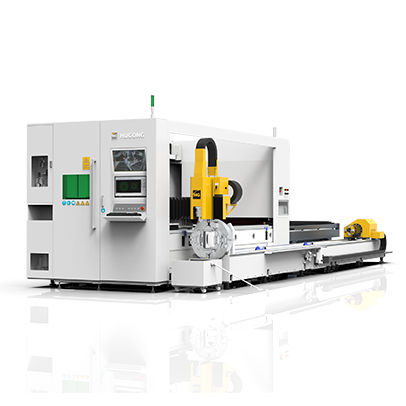
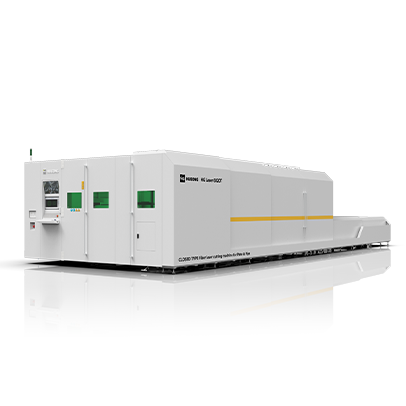
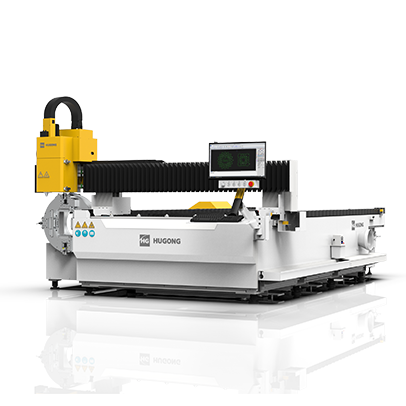
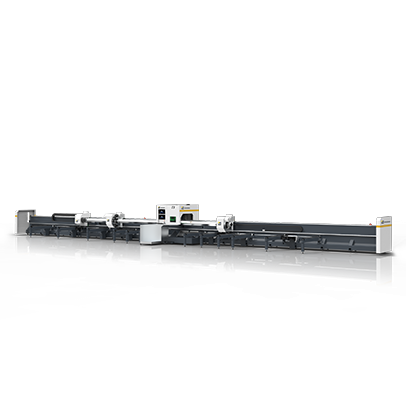
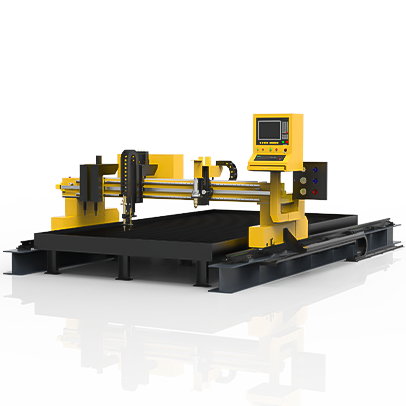
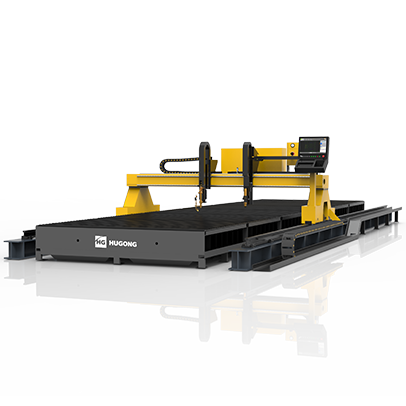
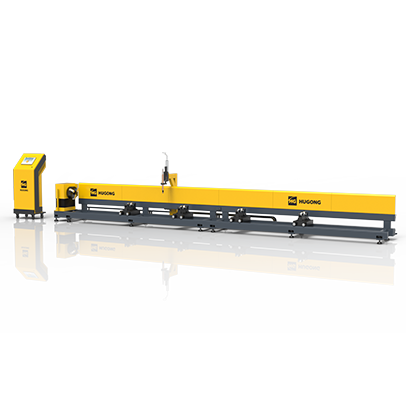
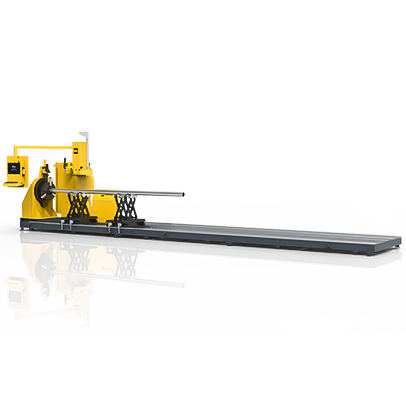
The FLASHLASER-T Series Fiber Laser Cutting Machine for Plate & Pipe is designed for manufacturers seeking a flexible, high-performance solution for both sheet metal and tube processing. It combines industrial-grade construction with precision components to deliver reliable cutting performance in continuous production environments.
Key Specifications
| Specification | Details |
|---|---|
| Laser Power Options | 1.5 kW / 2 kW / 3 kW / 4 kW / 6 kW |
| Sheet Cutting Size | Up to 6000 × 2500 mm |
| Round Tube Diameter | 20 mm – 220 mm |
| Square Tube Size | 15 × 15 mm – 150 × 150 mm |
| Maximum Linkage Speed | 60 m/min |
| Positioning Accuracy | ±0.05 mm |
| Beam Material | High-strength aluminum alloy (FEA-optimized) |
| Bed Construction | Welded steel, stress-relief treated |
Engineering Highlights
• High-strength aluminum alloy beam optimized through finite element analysis (FEA), providing excellent rigidity while maintaining dynamic performance at high speeds.
• Welded steel bed undergoes stress-relief treatment to ensure long-term dimensional stability and cutting precision, even under continuous heavy-duty operation.
• Internationally recognized core components including IPX laser source, Precitec cutting head, Yaskawa/Siemens servo motors, and Schneider electrical systems.
• Rigorous factory testing — every machine undergoes 72+ hours of continuous cutting tests before delivery.
See the FLASHLASER-T Series in action: Hugong Flashlaser-T-Series Laser Cutting Machine
How to Choose the Right Plate & Tube Laser Cutter
Selecting the right laser cutting system is a significant investment decision. Manufacturers should evaluate the following factors systematically:
Selection Checklist
• ☑ Material types — What metals do you process most frequently? (carbon steel, stainless, aluminum, etc.)
• ☑ Thickness range — What is the minimum and maximum material thickness? (Determines required laser power)
• ☑ Maximum sheet dimensions — What is the largest sheet size you need to cut? (Standard: 1500×3000 mm; Large: 2500×6000 mm)
• ☑ Tube diameter requirements — What is the range of tube diameters and cross-sections you process?
• ☑ Daily production volume — How many hours per day will the machine run? (Impacts power rating and automation needs)
• ☑ Mixed vs. dedicated production — Do you switch between sheet and tube frequently, or process one type at a time?
• ☑ Automation level required — Do you need auto-loading/unloading, exchange tables, or tube bundle feeders?
• ☑ Future expansion plans — Will your production scale or diversify in the next 2–3 years?
• ☑ Budget and ROI expectations — What is your target payback period?
• ☑ After-sales support — Is local technical support, spare parts availability, and training included?
Power Selection Guide
| Laser Power | Best For | Max Carbon Steel | Max Stainless |
|---|---|---|---|
| 1.5 kW | Thin sheet & light tube | ~10 mm | ~6 mm |
| 3 kW | General fabrication | ~16 mm | ~10 mm |
| 6 kW | Heavy-duty production | ~25 mm | ~16 mm |
Values are approximate. Actual cutting capacity depends on material grade, gas type, and cutting speed requirements.
For companies processing both flat sheets and structural tubes, an integrated machine like the FLASHLASER-T Series often delivers the best balance between productivity and investment, especially for job shops, custom fabricators, and manufacturers with diverse product lines.
Frequently Asked Questions
Q: What is a plate and tube fiber laser cutting machine?
A plate and tube fiber laser cutting machine is an integrated CNC laser system that processes both flat sheet metal and tubular or structural profiles on a single platform. It eliminates the need for separate sheet and tube cutting machines, reducing equipment investment by up to 40% while improving production flexibility for mixed-material orders.
Q: What materials can a plate and tube fiber laser cutting machine cut?
These machines can process carbon steel, stainless steel, aluminum, galvanized steel, brass, and copper. They handle flat sheets as well as round, square, rectangular, and oval tubes, plus angle steel and channel steel. The maximum cutting thickness depends on the laser power, ranging from approximately 10 mm (1.5 kW) to 25 mm (6 kW) for carbon steel.
Q: How to choose the right plate and tube laser cutting machine?
Key factors include: material types and thickness range, maximum sheet dimensions, tube diameter requirements, daily production volume, required automation level, and future expansion plans. For manufacturers processing both flat sheets and structural tubes, an integrated machine typically offers the best balance of productivity and investment cost. Consider laser power (1.5–6 kW), positioning accuracy (aim for ±0.05 mm or better), and after-sales support availability.
Q: What is the difference between an integrated plate and tube laser cutter and separate machines?
An integrated plate and tube laser cutter combines sheet metal and tube cutting in one system, saving approximately 50% floor space and reducing equipment cost by 30–40%. Separate machines require double the floor space and higher total investment but may offer higher throughput for dedicated high-volume production of a single material type. Integrated machines are best for mixed production, while separate machines suit specialized high-volume operations.
Q: What industries use plate and tube fiber laser cutting machines?
Plate and tube fiber laser cutting machines are widely used in steel structure fabrication, construction machinery, furniture manufacturing, agricultural equipment, fitness equipment, and automotive component manufacturing. Any industry that requires both flat sheet components and tubular structures can benefit from the integrated cutting capability.
Q: What is the positioning accuracy of the FLASHLASER-T Series?
The FLASHLASER-T Series achieves a positioning accuracy of ±0.05 mm with a maximum linkage speed of 60 m/min. It features a high-strength aluminum alloy beam optimized through finite element analysis (FEA) and a stress-relief-treated welded steel bed for long-term dimensional stability.
Q: What laser power should I choose for plate and tube cutting?
Laser power selection depends on your material thickness: 1.5 kW is suitable for thin sheet (up to ~10 mm carbon steel), 3 kW handles general fabrication (up to ~16 mm), and 6 kW is designed for heavy-duty production (up to ~25 mm). For mixed sheet and tube processing, 3 kW is the most popular choice as it balances cutting capability with cost efficiency.
Key Takeaways
• A plate and tube fiber laser cutting machine integrates sheet metal and tube cutting into one system, reducing equipment investment by up to 40%.
• It processes carbon steel, stainless steel, aluminum, galvanized steel, brass, and copper in both flat sheet and tubular forms.
• Common challenges — poor edge quality, positioning accuracy, and heat-affected zone — can be resolved through proper parameter optimization and quality machine components.
• Integrated machines save ~50% floor space compared to separate sheet and tube systems, making them ideal for mixed-production manufacturers.
• The FLASHLASER-T Series offers 1.5–6 kW power options, ±0.05 mm accuracy, and supports sheet sizes up to 6000 × 2500 mm.
• Key selection factors: material type/thickness, sheet size, tube diameter, production volume, automation needs, and future expansion plans.
Conclusion
Modern manufacturing increasingly demands equipment that is accurate, flexible, and efficient. A plate and tube fiber laser cutting machine helps manufacturers simplify production, reduce operating costs, and respond more quickly to changing customer requirements.
Whether producing structural steel components, machinery parts, furniture, or customized metal products, choosing the right laser cutting solution can significantly improve productivity and product quality. The FLASHLASER-T Series combines precision, reliability, and processing flexibility, making it an excellent choice for businesses looking to streamline both sheet and tube fabrication in a single machine.

 Address:7177 Waiqingsong Road.Qingpu District , Shanghai , PRC
 Post Code: 201700
 E-mail:sales@hugong.com
 Tel:0086-21-51211666
 Fax:+86-21-69715399